
Luminous intensity, also known as luminous power, refers to the brightness of a light source. It is the luminous flux emitted from a light source at a solid angle (unit: sr), essentially the density of luminous flux emitted by the light source or lighting fixture along a selected direction in space. In other words, it is a physical quantity representing the intensity of visible light radiation emitted by a light source within a certain direction and range, measured in candela (cd).
1 cd = 1000 mcd
1 mcd = 1000 μcd
Luminous intensity is relevant to point light sources, or when the size of the light source is relatively small compared to the illumination distance. This quantity indicates the converging ability of the light source in space. In short, luminous intensity describes the brightness of a light source because it is a combined description of luminous power and converging ability. The higher the luminous intensity, the brighter the light source appears. Under the same conditions, objects illuminated by this light source will also appear brighter.
Compared to traditional street lights, LED street lamps have higher energy efficiency and a longer lifespan. They also achieve energy savings and reduce light pollution through light decay control. Its luminous intensity is generally between 150 and 400 lux.
The Influence of Lamp Power and Pole Height on Streetlight Luminous Intensity
Besides the type of streetlight, lamp power and pole height also affect its luminous intensity. Generally, the higher the pole and the greater the lamp power, the wider the illumination range and the greater the luminous intensity.
The Influence of Lamp Arrangement on Streetlight Luminous Intensity
The arrangement of lamps is also a factor affecting streetlight luminous intensity. If the lamps are arranged too densely, the illumination range and luminous intensity will be affected. When multiple LEDs are arranged closely and regularly, their luminous spheres overlap, resulting in a more uniform luminous intensity distribution across the entire luminous plane. When calculating luminous intensity, the maximum point luminous intensity value provided by the manufacturer should be multiplied by 30% to 90% based on the LED viewing angle and LED density to obtain the average luminous intensity per LED. Therefore, when designing streetlights, the arrangement and quantity of lamps need to be considered to ensure the luminous intensity and illumination range of the streetlights.
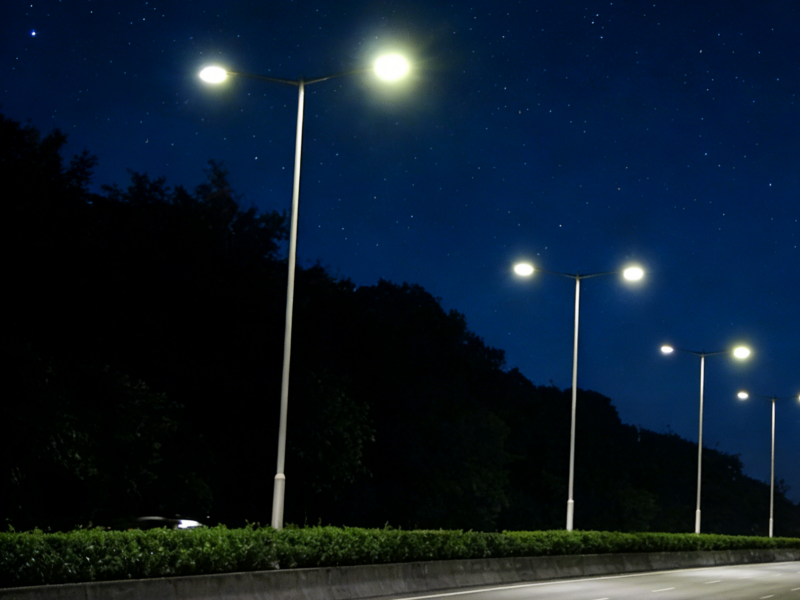
Tianxiang is a professional manufacturer of LED street lighting fixtures. Our LED street lighting fixtures use imported high-brightness chips with a luminous efficacy of up to 150LM/W, providing uniform brightness and soft light, effectively reducing glare and improving the safety of vehicles and pedestrians at night. The products support light-sensing and time-controlled dimming modes. The housing is made of high-strength aluminum alloy with an anti-corrosion powder coating, and is IP66 waterproof and dustproof, capable of stable operation in harsh environments from -40℃ to +60℃, ensuring a lifespan of up to 50,000 hours.
Our factory has a complete production chain and a strict quality control system. All products have passed CE, RoHS, and other international certifications. We promise to provide highly competitive wholesale prices, fast delivery, and comprehensive after-sales service. Welcome to inquire at any time!
Post time: Dec-26-2025


