
As a manufacturer of street lamps, we are often asked by customers and engineering contractors: What necessary information should be included on the LED street lamp labels? A standardized street light label is not just a formality; it is the main reference for installation, maintenance, and compliance verification, and it is also the core document for product quality traceability and after-sales service. Based on our production experience and relevant international standards, here is a practical guide.
1. Required Identification Information
Each LED street lamp label must clearly display the manufacturer’s name or trademark, model specifications, as well as the production month and year. These basic information can enable product traceability and warranty management. A unique brand identifier helps customers verify the authenticity of the product and contact the responsible supplier when technical support is needed. Additionally, it is recommended to mark the product serial number or batch number to achieve single-lamp traceability in large-scale supply projects. In case of quality issues, the problem batch can be quickly identified and corresponding measures taken.
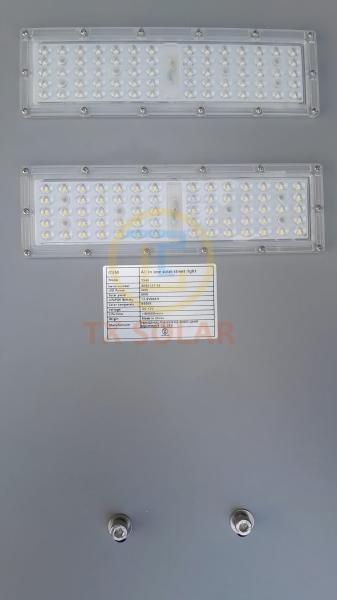
2. Electrical Specification Parameters
The street light label should indicate the rated voltage, frequency, and rated power. For LED street lamps in export markets, the rated voltage must match the local power supply – in Africa, Southeast Asia, and South America, it is usually 220–240V. Some purchase specifications may also require the marking of power factor and supply current information. Separating the rated power from the model number can avoid confusion during replacement orders. For street lamps that support dimming or intelligent control, the control interface type (such as 0-10V, DALI, etc.) and dimming range should be indicated to facilitate correct wiring and debugging by engineering personnel.
3. Luminous Performance Data
Modern street lamp labels increasingly include key lighting parameters. Lumens, luminous efficacy (lm/W), correlated color temperature (CCT), and color rendering index (CRI) help lighting designers and project engineers evaluate whether the product meets road lighting requirements. For LED lamps, the rated life (hours) and 50,000-hour luminous maintenance rate information can provide valuable reference for performance expectations. The light distribution type (such as Type I, Type II, Type III, etc.) is also recommended to be marked, as it directly relates to the lamp spacing and road illumination uniformity, which are key parameters in road lighting design.
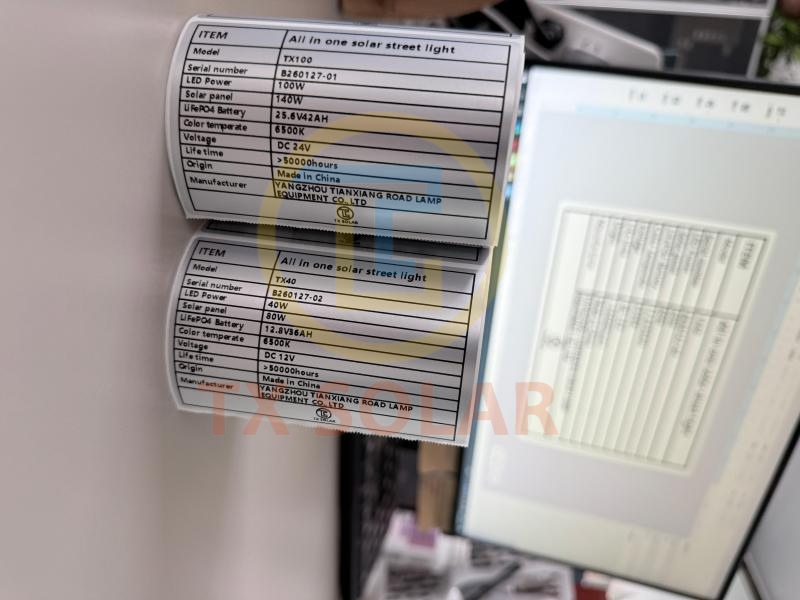
4. Certification and Compliance Marks
The street light label should carry relevant certification marks. For the European market, the CE mark indicates compliance with applicable directives. For the North American market, the UL or equivalent certification mark is necessary. The RoHS compliance symbol involves restrictions on hazardous substances. The specific certification file number (such as QAI file number) can be used to verify the validity of the certification. For markets with special requirements, there may also be certification marks such as ENEC, CB, and the target market’s entry requirements should be confirmed before export.
In summary, a well-designed LED street lamp label integrates identification information, electrical data, luminous indicators, and compliance marks. These pieces of information protect end-users, facilitate correct installation, and reflect the manufacturer’s commitment to transparency and quality.
Post time: Oct-16-2026


