
In the world of solar street lighting, end-users frequently obsess over wattage and battery amp-hours while treating color temperature as an afterthought—often defaulting to a binary “warm or cool” choice. As professional promotion operators with years of field data, we assert that improper color temperature selection is the leading cause of post-installation complaints, ranging from glare nuisances to compromised road safety. The right choice of automatic solar street light is not about personal preference; it is an engineering decision rooted in human physiology and environmental context.
Color temperature of solar street lighting, measured in Kelvin (K), defines the visual hue of white light. Lower values produce golden-yellow tones; higher values yield bluish-white illumination. Based on application scenarios, we categorize automatic solar street light color temperatures into three strategic tiers:
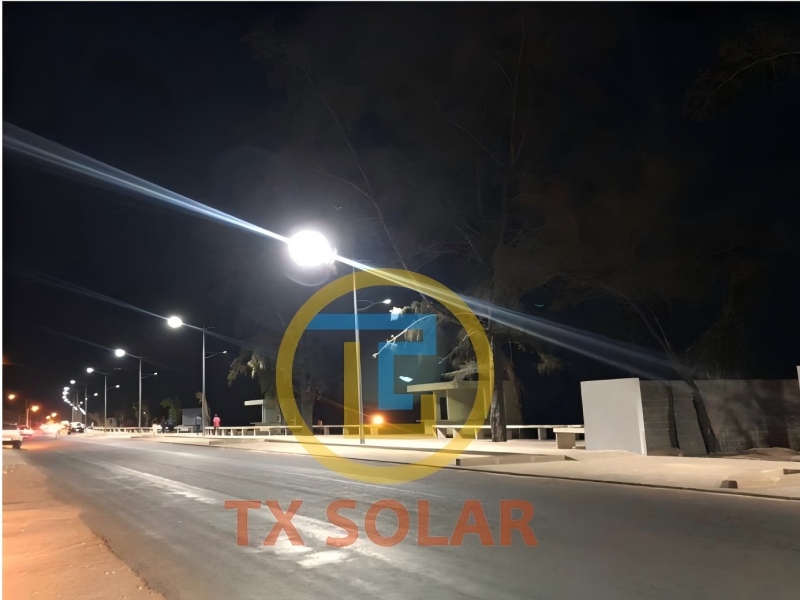
Tier 1: Warm White (2700K – 3500K) – The Guardian of Residential Comfort
With minimal blue-light components and exceptionally low glare, warm white light of automatic solar street lights mimics the gentle glow of traditional high-pressure sodium lamps. It is the undisputed solution for gated communities, riverside trails, historical districts, and university dormitory zones. In these settings, warm light of solar street lighting reduces melatonin suppression, preserves nocturnal ecology, and significantly decreases resident complaints about light trespass. Counter-intuitively, in foggy or humid coastal regions, warm light’s longer wavelength offers superior diffraction, often delivering better visual penetration than cool light under adverse weather.
Tier 2: Neutral White (4000K – 5000K) – The “Goldilocks Zone” for General Urban Applications
This band represents the fastest-growing segment in municipal tenders. It delivers a crisp, natural daylight-like experience that enhances color rendering (CRI > 70) without the clinical harshness of higher color temperatures. For urban secondary roads, commercial plaza perimeters, and industrial park connectors, neutral white strikes an optimal balance between driver alertness, pedestrian comfort, and energy efficiency—making it the default recommendation for over 80% of standard projects.
Tier 3: Cool White (5500K – 6500K) – The High-Visibility Enforcer for Arterial Roads
Cool white light of solar street lighting provides maximum luminance perception and significantly boosts contrast sensitivity for moving obstacles. It is the preferred specification for high-speed expressways, major intersections, airport cargo aprons, and seaport logistics yards, where rapid reaction times are paramount. However, this tier demands strict geographical exclusion from residential neighborhoods, as its elevated blue-light fraction is a primary culprit in urban light pollution and circadian disruption.
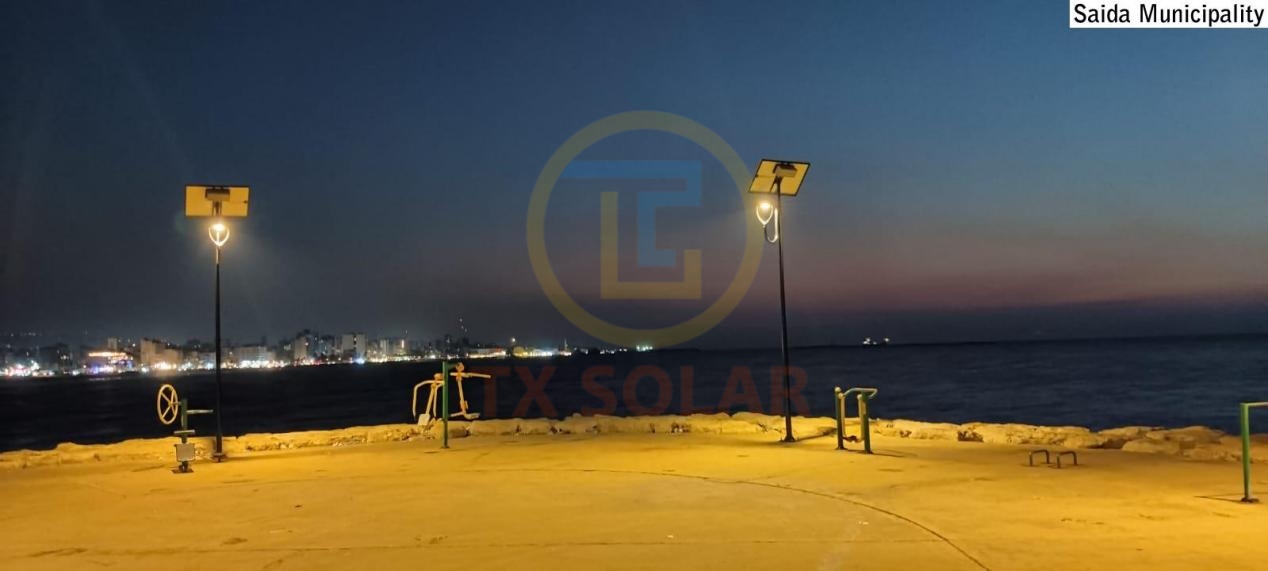
Based on practical experience in solar road lighting production and installation, we advise clients to apply the “Three-Dimensional Evaluation” framework: First, review local lighting master plans—many metropolitan areas now mandate color temperatures ≤4000K for all residential-adjacent infrastructure. Second, analyze climatic conditions—rainy/foggy zones favor warmer spectrums, while arid/dusty areas can leverage cooler light for enhanced luminous efficacy. Third, project long-term lumen maintenance—cool-white LEDs typically exhibit a marginally faster depreciation rate than warm-white chips; for 5-to-10-year warranty projects, this factor alone can dictate total lifecycle cost.
As professional promoters, our role transcends product pushing—we function as lighting consultants who translate technical metrics into tangible community benefits. The ideal color temperature of solar road lighting is never a random pick; it is the precise intersection of human-centric design and infrastructural safety. By guiding our clients through this strategic framework, we ensure every installed luminaire delivers not just illumination, but lasting value and satisfaction.
Post time: Aug-18-2026


