
Intelligent light poles are front-end sensing nodes of smart cities, and they employ a variety of sensors to realize functions such as environmental monitoring, traffic perception, safety warning, and intelligent dimming. Different application scenarios are matched with corresponding sensing devices to realize multi-purpose and comprehensive data collection. Here’s a detailed breakdown of common sensor types and their functions.
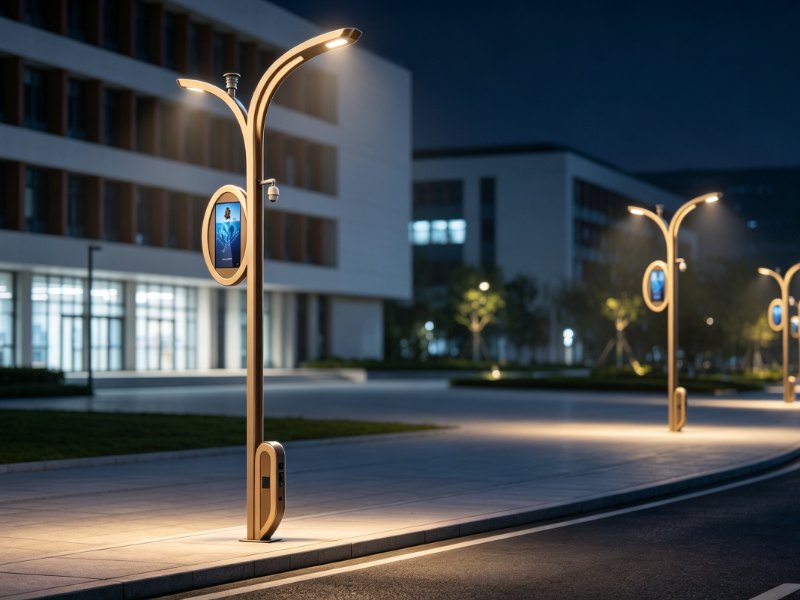
Light sensors are a basic configuration of intelligent lighting poles and an intelligent dimming core component. The sensor collects the real-time natural light intensity of the road surface, and the system automatically adjusts the brightness of the lights according to the data. During the day, when there is sufficient light, the lights are turned off completely; at dusk and early morning, power is reduced as required, and illumination is suitably increased on cloudy, rainy or foggy days. It can save more than 60% energy consumption compared to traditional constantly lit streetlights, avoiding light pollution from excessive light. Intelligent lighting poles are suitable for municipal road, park, and residential lighting renovation projects.
Environmental monitoring sensors are mainly used in intelligent light poles in the main roads, parks, and scenic spots of the city. These include sensors for temperature and humidity, PM2.5, PM10, noise, air pressure, formaldehyde, and negative oxygen ions. Temperature and humidity sensors collect real-time atmospheric data to provide a basis for urban meteorological statistics. Dust sensors monitor the concentration of air particulate matter to help the environmental protection departments control dust pollution at construction sites. Noise sensors capture excessive road noise signals and automatically upload them to the backend for early warning. Negative ion sensors are widely used in cultural and tourism scenic areas to display real-time ecological environment data and build a visualized urban ecological monitoring network.
Traffic and pedestrian flow sensing sensors include microwave radar, infrared human body sensors, and video recognition cameras. Microwave radar can detect the speed of road vehicles and traffic flow, which provides data for the scheduling of traffic signals and the reduction of street light brightness during the quiet period of the night. Infrared sensors are suitable for parks and rural roads, which are automatically brightened when pedestrians approach and work at low power during the quiet period. AI video recognition sensors, combined with high-definition cameras, count the flow of pedestrians, identify violations such as illegal parking, littering, etc., and push alarms through the backend, balancing lighting and urban management.
Security and meteorological auxiliary sensors, including vibration, rain, wind speed and direction, and water accumulation sensors. The vibration sensors are installed at the bottom of the intelligent light pole, and an alarm is immediately triggered when the light is pried open, hit, or stolen. Rain sensors detect rainfall and link with the streetlight’s advertising screen and charging station for waterproofing. Extreme winds: Wind speed and direction sensors are in place to warn of high wind speeds and to avoid tipping high mast lights over. Low-lying areas are equipped with sensors that detect the accumulation of water and report to the municipal government when flood waters reach a threshold during heavy rains to enable a rapid response to possible flooding.
Some intelligent street poles are also equipped with gas sensors to detect harmful gases such as carbon monoxide and ozone, which makes them suitable for industrial areas. Charging safety is checked by electromagnetic induction sensors that monitor the current and voltage of the charging station. The data from various sensors are transmitted to the smart management platform through 4G, LoRa, and 5G modules for unified monitoring, remote control, data storage, and analysis. The construction is simplified and the maintenance cost is reduced since the entire sensing system is integrated in the light pole and does not require any additional wiring, making it an indispensable part of the digital sensing network for smart cities.
Tianxiang intelligent lighting poles are equipped with multiple sensors including light, temperature, humidity and radar sensors, and can automatically adjust brightness for energy saving. The intelligent street poles are hot-dip galvanized to prevent corrosion, and are equipped with monitoring, broadcasting, charging piles and 5G micro base stations. They are suitable for municipal roads, parks, scenic spots, and have unified remote management, realizing one-stop smart city transformation. Contact me for customized solutions and special offers of intelligent street poles.
Post time: Jul-15-2026


