
Automatic smart street lights have a more complicated wiring structure than regular streetlights because they have an integrated power supply, network, control, and sensing systems. Standardized safety operating procedures should be strictly followed throughout the whole construction process to prevent leakage, short circuits, signal interference, and construction safety accidents, and to ensure long-term stable operation of the equipment.
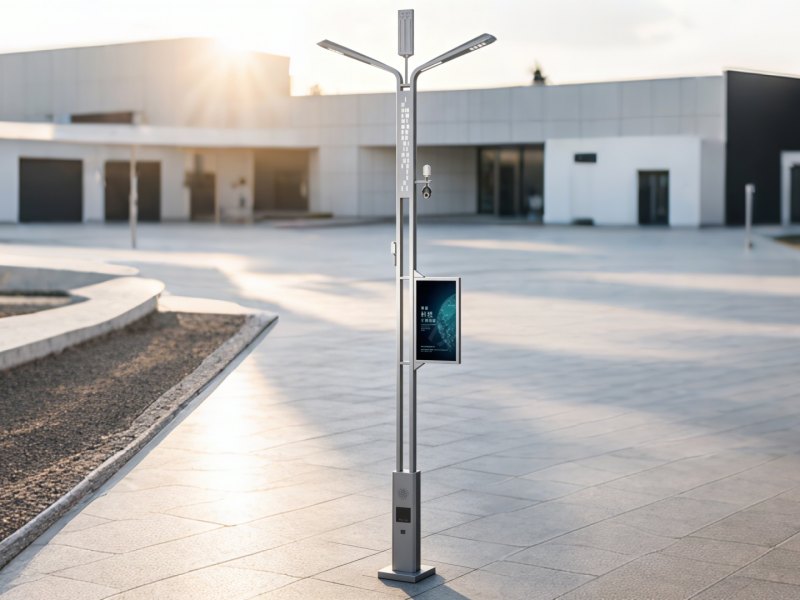
Before construction, safety preparations must be completed.
Workers need to be certified and wear insulated protective gear. They should check the road conditions, underground pipelines, and overhead lines at the construction site in advance and mark a construction warning zone. At the same time, it is necessary to verify the construction drawings and distinguish the high-voltage and low-voltage lines. It is strictly prohibited to mix the laying of high-voltage and low-voltage lines to prevent interference with the signals of intelligent equipment. All cables should be national standard, waterproof, weatherproof, and flame-retardant cables suitable for outdoor high and low temperatures, rain, snow, and sun exposure. Never use low-quality cables for building.
Wiring construction must be done in strict accordance with operating procedures.
Underground wiring for automatic smart street lights must be installed at the proper depth: at least 0.7 meters under the driveways and at least 0.5 meters under sidewalks. The cables shall be protected by PVC or galvanized steel conduits, with waterproof seals at the conduit openings to prevent water seepage and corrosion. The wiring inside the wireless smart street lights should be neat, with no squeezing, twisting, or knotting. Power and signal cables are to be laid in separate ducts with adequate spacing. All terminals must be securely crimped, insulated with tape, and housed in waterproof junction boxes to avoid loose connections and exposed wires.
Grounding and lightning protection are the most important safety issues.
Each automatic smart street light shall be equipped with a separate grounding device, and the grounding resistance shall be controlled within the standard specifications. The metal housing of the galvanized smart light poles and electrical appliance casings should be reliably grounded. Lightning protectors are installed to resist lightning surges in thunderstorms and protect precision equipment such as control systems, cameras, and gateways. After construction, redundant wiring must be removed so that tangled wiring doesn’t cause safety hazards.
After construction is finished, a detailed inspection and acceptance procedure has to be performed.
The circuit insulation, continuity, grounding resistance, and waterproof performance were tested in sequence. A power-on test was performed for short circuit, leakage, and signal deviation. Throughout construction, safety inspection records were made, and construction procedures were standardized to ensure the safety of construction personnel; the long-term stable and safe operation and maintenance of the automatic smart street lights; and the meeting of the safety standards of the municipal lighting project.
Tianxiang specializes in the production of wireless smart street lights and matching galvanized lamp poles. Tianxiang has its own production line, complete cable and control system components, and mature construction solutions. Tianxiang galvanized smart light poles are corrosion-resistant, wind-resistant, IP65 waterproof, energy-saving, and consumption-reducing. We supply one-stop supplies and technical after-sales service. Please contact us if you have any needs for more information.
Post time: Jul-07-2026


